
Measurement
A DEXA is useful when someone will review the scores with you.
Dual-energy X-ray absorptiometry can measure fat, muscle, and bone in one visit. At Tune Me, the scan is the first half of the appointment. The second half is what now.
A DEXA (dual-energy X-ray absorptiometry) scan is a short, non-invasive imaging test that uses a very low-dose X-ray to look at bone and body composition.
At Tune Me it is not a souvenir image. It is how we measure, so we can understand the scores and talk about a plan.
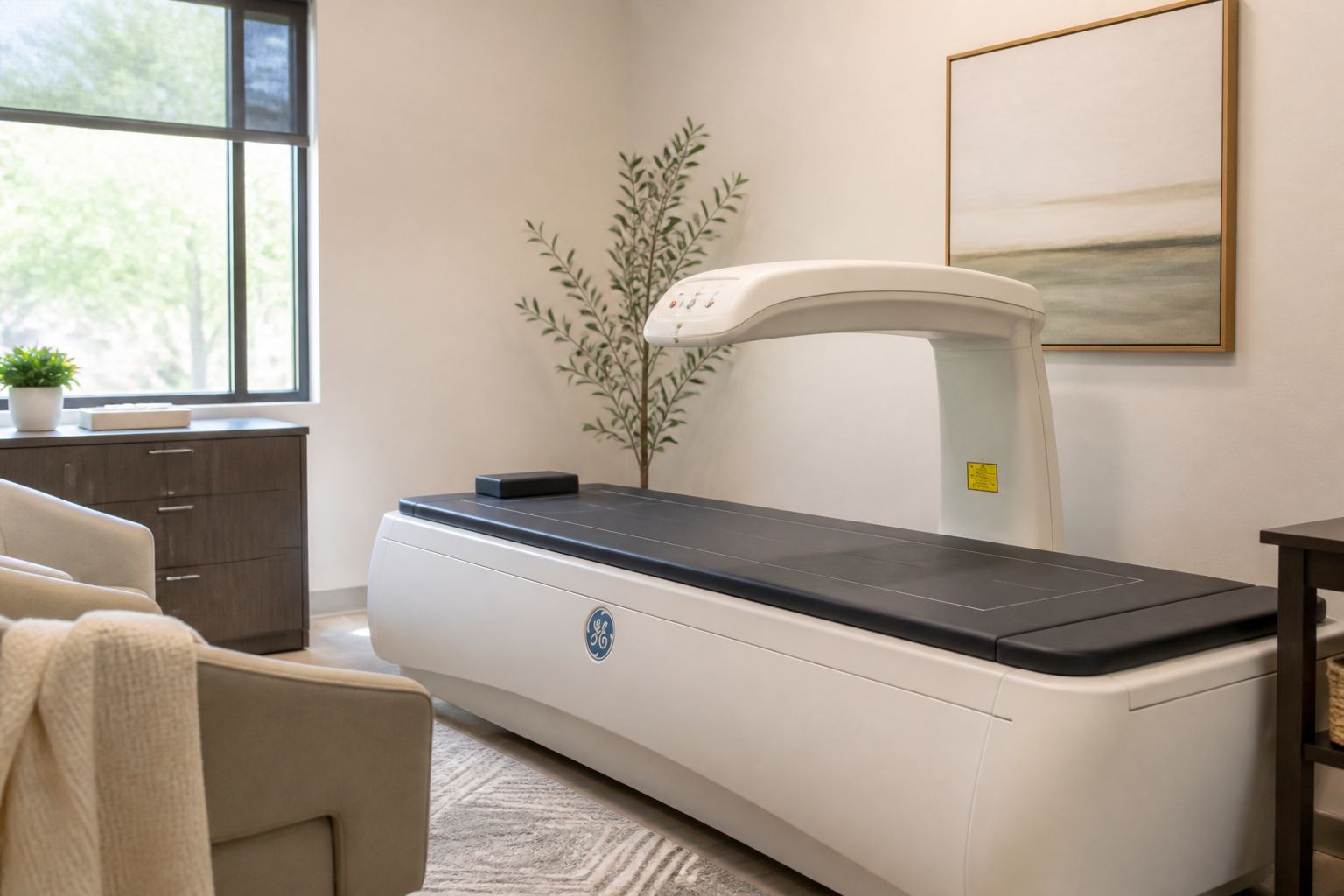
What a DEXA can show
- Bone mineral density (BMD) and bone mineral content (BMC)
- Body fat percentage and fat-free mass
- Lean muscle mass
- Visceral fat (the fat around the organs)
- Regional fat and muscle, including left and right arms and left and right legs
Those last comparisons matter. A single whole-body percentage hides a side that is quietly losing muscle, or a trunk-versus-limb pattern you cannot see on a scale.
Visceral fat, muscle, and bone — together
One study can tell three stories:
- Metabolic — overall fat and visceral fat (VAT, FibroScan, hormones, and the plan)
- Muscular — lean mass, including the limbs
- Bone — mineral content on a whole-body composition scan, or a dedicated lumbar-plus-femur bone-density study when that is the question
We read them together. Isolated “body fat %” is how people end up with information and no next step.
Is a DEXA scan safe?
DEXA uses a very low level of radiation. A typical scan is often described as a fraction of a microsievert — in the same neighborhood as everyday background exposure, and commonly compared to the natural radioactivity in a small handful of bananas.
DEXA scans are:
- Non-invasive and painless
- Considered compatible with pacemakers
- Used repeatedly in clinical and research settings when the question is worth answering
Do not schedule a scan if you are pregnant. Tell us if you might be.
Size and age
- Weight limit: 350 lbs
- Age: 18 years or older
How to prepare
Preparation is simple. A few details keep the measurement cleaner:
- Do not schedule if you are pregnant
- Wait if you have had recent imaging with contrast (typically the past 1–2 weeks)
- Remove metal — zippers, jewelry, underwire
- Wear comfortable clothing without a tight waistband
- Arrive hydrated
If you are unsure whether a recent test or implant is a problem, call and ask before you drive over.
Why get a DEXA?
A DEXA gives you objective data about how your body is changing.
It can help you:
- See the effect of nutrition and training on fat and muscle, not only weight
- Watch age-related change in composition and bone
- Look for early bone loss (osteopenia or osteoporosis) as part of a conversation with your physician
- Give your doctor something more useful than a home scale
DEXA is widely treated as the reference method for diagnosing osteoporosis and evaluating bone density. Body composition is a different — and often earlier — reason to come in.
Who should get a DEXA?
Bone health. A dedicated bone-density look is commonly discussed around midlife and later. Starting earlier can still be useful if you want a baseline before there is a problem.
Body composition. We treat this as part of activity and aging. It can be considered at any adult age. We scan people 18 and older.
If you are not sure which visit you need — composition, bone density, or both — ask. The what now page explains how we use each.
How accurate is it?
DEXA is treated as a gold-standard method for bone density and as a highly reproducible method for body composition. That is why we use it as the clinic measurement, then re-measure on a planned clock instead of chasing daily scale noise.
We do not publish invented precision percentages or risk multipliers on this site. If your physician wants a specific clinical report, say so when you book.
Left and right arms and legs
Unlike a scale — and unlike many consumer scans — DEXA can compare left versus right limbs.
That is the asymmetry bucket on the plan page: which arm or leg is carrying less muscle, and whether that matches an old injury, a sport, or a pain pattern. It is one of the reasons a composition visit is more than a fat percentage.
InBody and DEXA
If you already use InBody, you do not have to throw those numbers out. They answer a different question.
| InBody | DEXA | |
|---|---|---|
| How it works | Electrical impedance; hydration can move the reading | Imaging of fat, lean, and bone |
| Visceral fat | Typically estimated | Measured on the scan |
| Muscle | Whole-body estimate | Regional lean mass, including limbs |
| Left vs right | Limited | Direct arm and leg comparison |
| Bone density | Not measured | Measured (composition and/or dedicated sites) |
A fair way to use both: keep InBody for frequent trend checks if you already have it, and use DEXA when you want a cleaner baseline — especially for visceral fat, limb muscle, and bone.
We are happy to look at a recent InBody next to a DEXA during a visit.
If you are using or considering a GLP-1 medication
Accurate measurement matters here.
GLP-1 medicines can reduce fat, including visceral fat. They can also reduce muscle. A DEXA lets you and your clinician see what is actually changing so protein, training, or the medical plan your doctor owns can be adjusted.
The VAT page is the longer version of that stance — including why a rescan matters before weight loss starts coming from muscle, and where we begin the hormone conversation.
We are not publishing study percentages or citations on this page. Bring the medication list you already have. The job of the scan is to make the next clinical conversation more precise — not to replace it.
We do not list outside GLP-1 programs or tenants on this site.
After the scan
The visit is not over when the image is done.
What now? is the page that turns four DEXA stories into a plan. If the story is metabolic, start at VAT (including hormones). Supplement recommendations, when we make them, go through our Fullscript store based on what your scores and plan show. Body-composition follow-up is typically about 90 days. Dedicated bone-density follow-up is typically 12–24 months.
Standing offer: $150 for a body-composition visit. Pricing · Get a scan
Start with a useful first step.
A $150 body-composition visit at Body Guitar Clinic. Measurement, then a plan.